Chris F.A. Johnson: Cryptic Cruciverbalist

30 years of cruciverbalizing!

In February of 1979 I was working for the University of Toronto Department of Information Services (as it was then known). The department published the administration newspaper, the Bulletin, and the alumni magazine, the Graduate. My job as a graphic artist was to typeset and lay out camera-ready pages to send to the printer.

One morning, an article by the new editor of the Graduate crossed my desk. John Aitken asked Bulletin readers to submit cryptic crossword puzzles. Among other things, he wrote, “I have heard that they are easier to solve than to compose.” At the time, I rarely did crossword puzzles, and had never tried solving a cryptic.

There had been a time a few years earlier when my daily afternoon routine included buying the Globe & Mail and a cheap cigar. I would then go to Flanagan's lounge in the Holiday Inn (the newly completed first stage of the new Sudbury City Centre) to smoke the cigar and sip on a beer for an hour or two.

I would read the paper and solve the regular crossword — the 20-minute test as it was then known. Occasionally I would glance at the cryptic clues (the 40-minute test) and wonder what the clues meant. From time to time I compared the cryptic clues with the answers the next day. I began to understand how they were constructed, but, I asked myself, can anyone actually solve these things?

So, “harder to compose than to solve” are they? That sounded like a challenge! I spent that lunch hour composing a cryptic crossword. It was small (7x7), full of errors (a couple of words didn't fit the grid), and the clues....

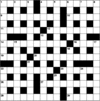
Looking back at my first puzzle that was considered of publishable quality, I now shudder at many of the clues. It appeared in the September/October 1979 issue of the Graduate.

Videos

How to Do Crossword Puzzles : Cryptic Crossword Puzzle Anagram Solving